Everybody, you can pick up my novel "On Black Wings" for free for the next couple days, if you ever wanted to check out my work, now is a great time to jump in!
Grab it by clicking on the link on the sidebar, and leave me a review if you like it!
Friday, April 24, 2015

A Blank Sheet of Paper
It feels good to get a huge project done, and finally move on. There is a little bit of pain as you let go, but it is a relief that what you worked so hard on is going out to the world. There is a tiny bit of anxiety there as well, as you wait to see what people feel about your work. You need to learn that "letting go" skill, and it applies to projects, negative experiences, life issues, and even project setbacks.
What you are looking at next is a blank sheet of paper.
It's a wonderful feeling, full of potential and excitement. It is also a bit intimidating, because you are used to working through a novel, and now you have nothing.
Let's not talk about the backlog, shall we?
Or let's. Everyone has a bucket-list of half-completed works, and I have a romance novel (CLS Romance project) that I am letting sit for a while. I need perspective on it, and I shall get back to this when it's time. I am sure when the magic returns this will be done in a weekend or two, and then it shall be set free for all the world to love. I am certain this shall happen, because this is exactly what happened with my last book, so I don't stress myself out about it.
But a blank sheet of paper. Wow.
It's like you are getting ready for a long road trip, and it's the night before you leave. You can't sleep. All your stuff is packed. You went to the store and you have snacks and drinks. You picked out your clothes and laid them out. You put together your bathroom bag. The car is gassed up. Your road music mix is set. You remembered to pack the chargers. You are ready.
And you can't sleep.
It is so exciting. Even if you don't know where you'll end up, the feeling of potential and adventure is real. You are going somewhere, and one day you will share your trip with the entire world. It will be a lot of work, since the drive is very long, but the trip itself will also be a huge part of the adventure. You will completely enjoy every minute, every hardship, and every joyous moment because this is not just a vacation - it is a survival course where you will beat all of those challenges and have fun despite all of the screw ups and missed turns along the way.
Vacations are not just getting away, they are acts of will that prove we are better than anything life can throw at us. We can have fun even though the car broke down, someone got sick, and despite every 'ruin the trip' thing that happens - we refuse those minor inconveniences to spoil the trip for us, and we make a conscious act of will to enjoy ourselves anyways. It is the act of denying negativity its victory, and in a way we are stronger people for saying, "despite all that, we had fun."
Writing is the same way. Despite all our past failures, terrible reviews, problems with the store, hang ups, life, problems, cold starts, grammar mistakes, obvious screw ups, social media negativity, and every other negative piece of crap life throws our way - we ignore them. We ignore them because nothing is going to ruin the experience of writing this book, getting to where we want to be, the long process of editing (going home), and finally telling the world about what we have done. Like our vacation, we are going to enjoy every part of writing that next book, because to do so is to deny the negative and prove we are stronger people and better writers.
So that blank sheet of paper sits before you. You think about it when you are away from your computer. It calls to you. You know you are ready. Your schedule is cleared, and your mind ready to begin. It is the night before your adventure begins and...you can't sleep.
Adventure awaits on that next page. Where will it take you? How will you overcome the difficulties and prove yourself stronger?
And most importantly...where will you go?
What you are looking at next is a blank sheet of paper.
It's a wonderful feeling, full of potential and excitement. It is also a bit intimidating, because you are used to working through a novel, and now you have nothing.
Let's not talk about the backlog, shall we?
Or let's. Everyone has a bucket-list of half-completed works, and I have a romance novel (CLS Romance project) that I am letting sit for a while. I need perspective on it, and I shall get back to this when it's time. I am sure when the magic returns this will be done in a weekend or two, and then it shall be set free for all the world to love. I am certain this shall happen, because this is exactly what happened with my last book, so I don't stress myself out about it.
But a blank sheet of paper. Wow.
It's like you are getting ready for a long road trip, and it's the night before you leave. You can't sleep. All your stuff is packed. You went to the store and you have snacks and drinks. You picked out your clothes and laid them out. You put together your bathroom bag. The car is gassed up. Your road music mix is set. You remembered to pack the chargers. You are ready.
And you can't sleep.
It is so exciting. Even if you don't know where you'll end up, the feeling of potential and adventure is real. You are going somewhere, and one day you will share your trip with the entire world. It will be a lot of work, since the drive is very long, but the trip itself will also be a huge part of the adventure. You will completely enjoy every minute, every hardship, and every joyous moment because this is not just a vacation - it is a survival course where you will beat all of those challenges and have fun despite all of the screw ups and missed turns along the way.
Vacations are not just getting away, they are acts of will that prove we are better than anything life can throw at us. We can have fun even though the car broke down, someone got sick, and despite every 'ruin the trip' thing that happens - we refuse those minor inconveniences to spoil the trip for us, and we make a conscious act of will to enjoy ourselves anyways. It is the act of denying negativity its victory, and in a way we are stronger people for saying, "despite all that, we had fun."
Writing is the same way. Despite all our past failures, terrible reviews, problems with the store, hang ups, life, problems, cold starts, grammar mistakes, obvious screw ups, social media negativity, and every other negative piece of crap life throws our way - we ignore them. We ignore them because nothing is going to ruin the experience of writing this book, getting to where we want to be, the long process of editing (going home), and finally telling the world about what we have done. Like our vacation, we are going to enjoy every part of writing that next book, because to do so is to deny the negative and prove we are stronger people and better writers.
So that blank sheet of paper sits before you. You think about it when you are away from your computer. It calls to you. You know you are ready. Your schedule is cleared, and your mind ready to begin. It is the night before your adventure begins and...you can't sleep.
Adventure awaits on that next page. Where will it take you? How will you overcome the difficulties and prove yourself stronger?
And most importantly...where will you go?
Wednesday, April 22, 2015
Stress + Exhaustion = Creative Disease
I was struck by Joss Whedon's recent interviews around the Age of Ultron, with him saying:
I am reminded of the thousands and thousands of writers making a living, or trying to, off of the current e-reader market. Some writers throw out book after book, hoping for traction and banking on volume to make a livable wage. Others strike gold, and many, many toll away in obscurity, never to see the recognition they deserve. It is a fickle market, and success is never predictable or guaranteed.
Every time I see an ad saying, "Get rich off of e-books!" I am reminded of the gold rush days, and how most prospectors found nothing but backbreaking work, wasted years, and lost dreams. I don't want to dissuade anyone, but making a living as a successful writer takes a lot of work. A lot of work. You may end up craving the certainty and security of a normal job after a while.
Mr. Whedon gives me the impression that creating art, in his case movies, for a large corporate entity drains him because of all the demands the large entertainment bureaucracy puts on him and the process. For many independent writers, we have to write books, edit them, market them, respond to fans, and keep the show rolling. For those who try to make this their sole income, they have to keep releasing books in order to keep the money coming in, since the most income is typically generated by new titles, and new titles selling older works. Given 'everybody else is doing it' as well, and you have created a situation where more and more people are jumping in, and more and more work is needed to keep up and get noticed.
I believe the big problem today isn't writing books, it is discovering them.
Given all that, it is a lot of stress and work for the indie writer. Add normal life's stress and work on top of that, and you could find yourself feeling like you are in Mr. Whedon's shoes. I sympathize with him, and I wish him a long and well-deserved vacation. As creative people, we need to take breaks, and then we come back with better stuff than before.
I have also edited work I have done when stressed out and exhausted, and I can see the lack of attention to detail and confusion in my own work. For big productions like movies, there is a large team there that catches this stuff, so the system has a built-in immune system for mistakes and burn-out by anyone on the team. For smaller producers and single operators like indie writers, there is no safety net.
The best thing we can do to deal with work produced when we are burnt out is put it aside for a while and come back to it later when we have a clear head. I have done this, and it is a technique I use today to get perspective on my work. Some writers can do this with multiple projects, and come back to one out of several to keep things fresh and in perspective.
Then again, a big team can't put things on hold since you got hundreds of people on the clock and waiting. So we have that advantage of being able to put things aside. For some writers, they can't, paying the rent means they can't put a project aside. Combined with a lack of redundancy and burn-out protection, this is a dangerous thing. So now, your bills and keeping the lights on are the pressure of 'on the clock and waiting' for you.
I don't have an answer for any of this, if I did, I would be running things and not writing about them. We need to understand that the market for creative goods is a ravenous beast, it will take as much as you can give, and then much more. The market can become your master and ruin your life. It can sit there and flat-out ignore you despite you screaming at the top of your lungs. It can look like a beach packed shoulder-to-shoulder with people looking to get noticed, and still let the lines waiting in to play.
To survive, you need to be the master of this chaotic and random force. You cannot let it be the master of you. If you have a plan to do something, write it down and execute despite everything else. Like walking on that crowded beach, you could let the crowds push you and steer you in random directions for hours, when all you wanted to do is walk over and get some ice cream on the boardwalk.
To get that ice cream, you need to work your way through the crowd, ignore the ways they want to push you in, find places where you can walk easier, and work towards your goal step by step. You will get there, and it will take work. You may not get what you want when you are there either, they could have run out of ice cream. Then you need to be flexible, and make a plan to get popsicles at another stand nearby. To be successful, you need to learn how to deal with the crowd, and if needed, ignore it and move towards your goal. You need to be able to set new goals based on changing conditions. You also need to be able to measure your energy and health, and make sure you can realistically get to where you are going.
Managing the forces which inflict stress and exhaustion not only help you with your own health, they help you avoid the 'creative disease' that takes you from the top of your game. These forces are the same which get in the way of reaching our goals. We need to know when to stop and rest. We need to know when to push forward. We need to learn to not be afraid of the crowd, and move through it to get to where we want to be. We cannot let it rule our lives. We must understand it, and be the master of it.
"This was the hardest work I've ever done,” he readily admitted, “and at some point, when it's that hard, you just feel like you've lost."It's a great quote, and a great article, please go check it out. He talks about the process of creating something, and how the demands of the creative marketplace drained him to the point of exhaustion.
I am reminded of the thousands and thousands of writers making a living, or trying to, off of the current e-reader market. Some writers throw out book after book, hoping for traction and banking on volume to make a livable wage. Others strike gold, and many, many toll away in obscurity, never to see the recognition they deserve. It is a fickle market, and success is never predictable or guaranteed.
Every time I see an ad saying, "Get rich off of e-books!" I am reminded of the gold rush days, and how most prospectors found nothing but backbreaking work, wasted years, and lost dreams. I don't want to dissuade anyone, but making a living as a successful writer takes a lot of work. A lot of work. You may end up craving the certainty and security of a normal job after a while.
Mr. Whedon gives me the impression that creating art, in his case movies, for a large corporate entity drains him because of all the demands the large entertainment bureaucracy puts on him and the process. For many independent writers, we have to write books, edit them, market them, respond to fans, and keep the show rolling. For those who try to make this their sole income, they have to keep releasing books in order to keep the money coming in, since the most income is typically generated by new titles, and new titles selling older works. Given 'everybody else is doing it' as well, and you have created a situation where more and more people are jumping in, and more and more work is needed to keep up and get noticed.
I believe the big problem today isn't writing books, it is discovering them.
Given all that, it is a lot of stress and work for the indie writer. Add normal life's stress and work on top of that, and you could find yourself feeling like you are in Mr. Whedon's shoes. I sympathize with him, and I wish him a long and well-deserved vacation. As creative people, we need to take breaks, and then we come back with better stuff than before.
I have also edited work I have done when stressed out and exhausted, and I can see the lack of attention to detail and confusion in my own work. For big productions like movies, there is a large team there that catches this stuff, so the system has a built-in immune system for mistakes and burn-out by anyone on the team. For smaller producers and single operators like indie writers, there is no safety net.
The best thing we can do to deal with work produced when we are burnt out is put it aside for a while and come back to it later when we have a clear head. I have done this, and it is a technique I use today to get perspective on my work. Some writers can do this with multiple projects, and come back to one out of several to keep things fresh and in perspective.
Then again, a big team can't put things on hold since you got hundreds of people on the clock and waiting. So we have that advantage of being able to put things aside. For some writers, they can't, paying the rent means they can't put a project aside. Combined with a lack of redundancy and burn-out protection, this is a dangerous thing. So now, your bills and keeping the lights on are the pressure of 'on the clock and waiting' for you.
I don't have an answer for any of this, if I did, I would be running things and not writing about them. We need to understand that the market for creative goods is a ravenous beast, it will take as much as you can give, and then much more. The market can become your master and ruin your life. It can sit there and flat-out ignore you despite you screaming at the top of your lungs. It can look like a beach packed shoulder-to-shoulder with people looking to get noticed, and still let the lines waiting in to play.
To survive, you need to be the master of this chaotic and random force. You cannot let it be the master of you. If you have a plan to do something, write it down and execute despite everything else. Like walking on that crowded beach, you could let the crowds push you and steer you in random directions for hours, when all you wanted to do is walk over and get some ice cream on the boardwalk.
To get that ice cream, you need to work your way through the crowd, ignore the ways they want to push you in, find places where you can walk easier, and work towards your goal step by step. You will get there, and it will take work. You may not get what you want when you are there either, they could have run out of ice cream. Then you need to be flexible, and make a plan to get popsicles at another stand nearby. To be successful, you need to learn how to deal with the crowd, and if needed, ignore it and move towards your goal. You need to be able to set new goals based on changing conditions. You also need to be able to measure your energy and health, and make sure you can realistically get to where you are going.
Managing the forces which inflict stress and exhaustion not only help you with your own health, they help you avoid the 'creative disease' that takes you from the top of your game. These forces are the same which get in the way of reaching our goals. We need to know when to stop and rest. We need to know when to push forward. We need to learn to not be afraid of the crowd, and move through it to get to where we want to be. We cannot let it rule our lives. We must understand it, and be the master of it.
Tuesday, April 21, 2015
Finishing Up, Feelings and Final Changes
It's always bittersweet wrapping a project up. I am working through a non-mainstream release at the moment, one of my spicier romance novels published under another name, but the feelings are still the same.
I am done my text-to-speech pass, and this was a big one, some 42,000 words. It is nearly as long as my YA book, and this one is a series release, part two of three of four. My average series release is around 15,000 words so this is a big one - with nearly three times the page count.
Every writer settles into the books they like to write, for me, these are novellas and full novels. I love the short story, and I love the freshness and immediacy like a garden salad. I love serial writing as well, since it keeps each installment fresh, and lets me pause between major plot arcs for perspective.
I am doing a Kindle Paperwhite read through now, and taking my time at this last read through of the book. I do a minimum of three passes, once reading, once text, and the final reading on a device other than my computer screen. Before that it gets read constantly, but it is also being written in constantly, so development time does not count.
The cover is done. The front and back matter is done. But I still have yet to write my store page text. This always takes a long time for me, as I want to provide a good experience to customers, and I don't want to spoil too much for the reader either. I also want to be careful of painting the wrong picture, or over hyping the book, so I find myself editing the store page text over and over again.
That will come in due time, for now, I am doing that last walk before this gets sent away, the final read through.
I get to look at the book again through new eyes, and the e-reader gives me a sometimes unforgiving but wonderful new perspective on the book. I always like to read something as if the customer were reading it, and seeing the book in black and white on e-ink makes the words pop to me, and gives them a fresh and unfamiliar look. This is critical for word choice, dialog, and sound. I have noticed things in my e-ink read-throughs that I correct frequently, and these are really great times to do those final spot checks and get the book ready to go.
But there is that feeling I can't shake of just adding a little bit more. I am very happy now, but a book unreleased is a book waiting to be worked on. I want to be done, and I feel I am so very close.
And then the feeling comes. Just release it. It's bittersweet, and it is both and ending and a beginning. It is a good feeling, but sad in another way. The book is done, and I've told my story. It is ready for the world. I am ready to listen to people's reactions. I am ready to move on. I shall plant the seeds for the next book, should there be one in this series, and give those time to grow.
And I may work on something else for a while if the mood strikes me. Good books cannot be forced, they will come to you. I have some other projects that need to be worked on as well, maybe I will revisit those. Maybe those books on my desk will come back and call to me. Maybe it shall be their turn next. Or maybe it shall be something new.
For now, I am reading again, and my Paperwhite is happily clicking along, page after page. My Scrivener document is open, and ready for small changes. And page after page goes by, and we count down towards the end.
And the book shall go in the store after the final file is built, and of course, tested one last time.
But for now, I read.
I am done my text-to-speech pass, and this was a big one, some 42,000 words. It is nearly as long as my YA book, and this one is a series release, part two of three of four. My average series release is around 15,000 words so this is a big one - with nearly three times the page count.
Every writer settles into the books they like to write, for me, these are novellas and full novels. I love the short story, and I love the freshness and immediacy like a garden salad. I love serial writing as well, since it keeps each installment fresh, and lets me pause between major plot arcs for perspective.
I am doing a Kindle Paperwhite read through now, and taking my time at this last read through of the book. I do a minimum of three passes, once reading, once text, and the final reading on a device other than my computer screen. Before that it gets read constantly, but it is also being written in constantly, so development time does not count.
The cover is done. The front and back matter is done. But I still have yet to write my store page text. This always takes a long time for me, as I want to provide a good experience to customers, and I don't want to spoil too much for the reader either. I also want to be careful of painting the wrong picture, or over hyping the book, so I find myself editing the store page text over and over again.
That will come in due time, for now, I am doing that last walk before this gets sent away, the final read through.
I get to look at the book again through new eyes, and the e-reader gives me a sometimes unforgiving but wonderful new perspective on the book. I always like to read something as if the customer were reading it, and seeing the book in black and white on e-ink makes the words pop to me, and gives them a fresh and unfamiliar look. This is critical for word choice, dialog, and sound. I have noticed things in my e-ink read-throughs that I correct frequently, and these are really great times to do those final spot checks and get the book ready to go.
But there is that feeling I can't shake of just adding a little bit more. I am very happy now, but a book unreleased is a book waiting to be worked on. I want to be done, and I feel I am so very close.
And then the feeling comes. Just release it. It's bittersweet, and it is both and ending and a beginning. It is a good feeling, but sad in another way. The book is done, and I've told my story. It is ready for the world. I am ready to listen to people's reactions. I am ready to move on. I shall plant the seeds for the next book, should there be one in this series, and give those time to grow.
And I may work on something else for a while if the mood strikes me. Good books cannot be forced, they will come to you. I have some other projects that need to be worked on as well, maybe I will revisit those. Maybe those books on my desk will come back and call to me. Maybe it shall be their turn next. Or maybe it shall be something new.
For now, I am reading again, and my Paperwhite is happily clicking along, page after page. My Scrivener document is open, and ready for small changes. And page after page goes by, and we count down towards the end.
And the book shall go in the store after the final file is built, and of course, tested one last time.
But for now, I read.
Friday, April 17, 2015
Six Words for the Moment
If you could only use six words to describe your current moment, what would those be?
This is, in essence what we do every time we add a new sentence to our works. Every moment, the sequential stream of events we call life, is boiled down and recorded one string of words at a time. There is so much going on around us, and also by nature the worlds our characters live in, it almost seems impossible to pick so few words. But we must, we can't communicate everything because I could fill a volume with just the details of one moment in time.
So we must choose our words, the ones we will use to record that moment in time, carefully.
But how do you do it? In a way, it is like using a pinhole camera to take in a grand vista of which you can see for hundreds of miles around. You only get a few words before the reader's mind leave you, and moves on to that next action, that next line of dialog, or that next bit of information you choose to share about the scene. There are so many words, we could spend paragraphs talking about the sweep of the land, how the fields below look like tiny squares of bread, how the clouds rest gently on the plains, and the smell of the air, the thin cool air, and on and on. It's impossible to take it all in, yet you must.
You need to communicate the essence of the scene in as few words as possible, because you have a book to get on with. You have love lives to explore, traumas to overcome, tragedies to inflict, revelations to deliver, and every thing else a writer does. We are the god in this world, and we cannot linger. Our entire world needs attention, in the past, the present, and the future. We cannot stay in this moment for long.
Yet for some moments, we want to spend just a little longer. If this vista is so grand, we may decide to spend a moment to look, to see, and to live in this moment before the march of time moves on. We will give ourselves a few more words here, and we will let ourselves wander here for a moment. These moments are rare and precious, as the writer can't paint a grand vista in every scene, and we need to keep the tick-tock of the clock moving on to our book's eventual end.
But how do you pick the words if you have so few?
It's like asking, which way do you go if you are on a long journey?
Well, for that second question, the answer is easy, you go the shortest route. There are some exceptions for easier routes that are a little longer, but we tend to be moving towards our destination along the path of least resistance. This is how you travel, and it is should be how you write. Now, on a long trip you need to be patient too, you can't expect to get to where you want to go in a couple heartbeats, so you pace yourself, be patient, and take in the sights along the way.
So those words you pick should be like the ones you remember from that long trip. Maybe there was this glorious sunset on the road, or some eccentric retired couple in a RV from Canada at the last gas station you can't get out of your head. Maybe it's a pair of ravens sitting on a road sign watching a smeared spot of road kill. Maybe it's the looming clouds of a storm and flashes of thunder that never came. Maybe it's the face of a mountain that looked like an actual face for just a moment, and the next time you looked it was gone. You know these moments by heart, they speak to you, and they stick in your mind like photographs that will only be gone to the world when you pass onto the next.
So you pick the best, and the best isn't always the most Norman Rockwell or Thomas Kinkade, they are the ones that stick with you. These are the words, and these will be the six of which you will choose. You will make them the best, and not linger so long the reader tires or says 'I get it already' you will give them just enough to get a taste, but not pile up on the plate. We want to keep the reader hungry, always wanting more, and not getting so bogged down with the moment they are full and want to go to sleep.
Writers eat light meals and serve small portions. We experience every taste. We sample a hundred small dishes and sit there for a moment with each, wondering how we could put each taste into words. Maybe we even pull out a notebook after a particularly interesting taste, and we write our thoughts down. We sample life. We wonder how alone that one speck of dust is sitting on the back of our laptop in that sea of black. We notice. We record. We understand measure and metronome. We understand the economy of words.
Picking six seems much easier now.
This is, in essence what we do every time we add a new sentence to our works. Every moment, the sequential stream of events we call life, is boiled down and recorded one string of words at a time. There is so much going on around us, and also by nature the worlds our characters live in, it almost seems impossible to pick so few words. But we must, we can't communicate everything because I could fill a volume with just the details of one moment in time.
So we must choose our words, the ones we will use to record that moment in time, carefully.
But how do you do it? In a way, it is like using a pinhole camera to take in a grand vista of which you can see for hundreds of miles around. You only get a few words before the reader's mind leave you, and moves on to that next action, that next line of dialog, or that next bit of information you choose to share about the scene. There are so many words, we could spend paragraphs talking about the sweep of the land, how the fields below look like tiny squares of bread, how the clouds rest gently on the plains, and the smell of the air, the thin cool air, and on and on. It's impossible to take it all in, yet you must.
You need to communicate the essence of the scene in as few words as possible, because you have a book to get on with. You have love lives to explore, traumas to overcome, tragedies to inflict, revelations to deliver, and every thing else a writer does. We are the god in this world, and we cannot linger. Our entire world needs attention, in the past, the present, and the future. We cannot stay in this moment for long.
Yet for some moments, we want to spend just a little longer. If this vista is so grand, we may decide to spend a moment to look, to see, and to live in this moment before the march of time moves on. We will give ourselves a few more words here, and we will let ourselves wander here for a moment. These moments are rare and precious, as the writer can't paint a grand vista in every scene, and we need to keep the tick-tock of the clock moving on to our book's eventual end.
But how do you pick the words if you have so few?
It's like asking, which way do you go if you are on a long journey?
Well, for that second question, the answer is easy, you go the shortest route. There are some exceptions for easier routes that are a little longer, but we tend to be moving towards our destination along the path of least resistance. This is how you travel, and it is should be how you write. Now, on a long trip you need to be patient too, you can't expect to get to where you want to go in a couple heartbeats, so you pace yourself, be patient, and take in the sights along the way.
So those words you pick should be like the ones you remember from that long trip. Maybe there was this glorious sunset on the road, or some eccentric retired couple in a RV from Canada at the last gas station you can't get out of your head. Maybe it's a pair of ravens sitting on a road sign watching a smeared spot of road kill. Maybe it's the looming clouds of a storm and flashes of thunder that never came. Maybe it's the face of a mountain that looked like an actual face for just a moment, and the next time you looked it was gone. You know these moments by heart, they speak to you, and they stick in your mind like photographs that will only be gone to the world when you pass onto the next.
So you pick the best, and the best isn't always the most Norman Rockwell or Thomas Kinkade, they are the ones that stick with you. These are the words, and these will be the six of which you will choose. You will make them the best, and not linger so long the reader tires or says 'I get it already' you will give them just enough to get a taste, but not pile up on the plate. We want to keep the reader hungry, always wanting more, and not getting so bogged down with the moment they are full and want to go to sleep.
Writers eat light meals and serve small portions. We experience every taste. We sample a hundred small dishes and sit there for a moment with each, wondering how we could put each taste into words. Maybe we even pull out a notebook after a particularly interesting taste, and we write our thoughts down. We sample life. We wonder how alone that one speck of dust is sitting on the back of our laptop in that sea of black. We notice. We record. We understand measure and metronome. We understand the economy of words.
Picking six seems much easier now.
Thursday, April 16, 2015
To Write and Refine, Your Sound, the Moment
I am editing the next in a series I am working on, and this is getting me thinking about a workshop related to 'refinement.' The more passes I make, the better it gets. The more I read my work, the more ideas I have, and the more I can go back and foreshadow and do all sorts of fun things with leading and hints. There are parts which I don't want to give too much away, and there are others where I do.
There is a process of refinement I am working through, and I find it highly relaxing and enjoyable. This is the boiling down of the soup stock, the heightening of the flavor, and the focusing the experience part that I love. Raw writing is just that, raw. There are times when you want that freshness of raw emotion, and there are times where you want a section of writing to have a smooth finish and intense flavor.
I accidentally went back over a section I had already edited and marked 'done' and found many things to improve. I made those changes, refined again, and I am happy I did. There weren't grammatical or structural errors more than they were, 'things I wanted to see said.' There are important points to drop to setup things which will come, and also other ones to take out as not to ruin the surprise.
There are always ways to show instead of tell, and with every pass it gets better and better. There are times when showing is extraneous, and once you read something enough and get a feel for how it 'should' read, you will develop that ear for your words. You are discovering what your words should say. You are improving the way in which your writing reads.
You are developing a sound.
Think of this as your sound. Every musical band has one, instantly recognizable in slow songs and fast, jazzy and soft, you know a band when you hear them. As a writer, you need to become in tune with your sound, how your words should sound, and focus on that aspect of your creative talents.
When you write for the sound of your words, you will find certain things don't make as much sense any more. Strange twists of phrase alien to how you want your book to read will stand out. Long boring parts shall be just that. Clumsy words will stumble, fall, and you will replace them with elegance. The sticky sap of purple prose shall be washed away. Telling will reveal itself as disrespectful of the reader's intelligence, and you shall paint your strokes to show and lead eyes and minds to where you want them to go.
When I think of editing this way, it takes on a new meaning to me. I am creating an experience, and not just checking for missed notes. You correct, and then you craft. You shape, and then you highlight. You hammer out large shapes, and then take pass after pass as your details get finer and finer.
Refinement.
Boiling down, making an experience pure, and removing distractions and impurities. Delivering something to a discerning reader which is free from blemish, yet has a sense of design from the largest sweep of the statue's form, down to the finest hair of an eyelash. With refinement, you make multiple passes to shape and fine-tune your creation's form and structure, and you get better with each pass.
Refinement is also a metaphor for life. We don't get older, what we care about becomes more important to us, and we get better at seeing it. We refine our tastes and interests to that which we really love. We focus down on the most enjoyable parts. We develop our sense of macro and micro. We can place important on pieces of the form, and where eyes should be drawn. We become more aware, and less random.
It is a heightened state of awareness that I love being in, and I look forward to experiencing every time I sit down to review my work. It's not just the current scene, but it is seeing the big picture and the individual moment all at the same time, like a freeze frame photograph of a touchdown score in football that boils the entire game down to that moment, yet still is a part of the larger event. It is the small and the large in one point of time, with small event after small event building together to create a whole.
There is a process of refinement I am working through, and I find it highly relaxing and enjoyable. This is the boiling down of the soup stock, the heightening of the flavor, and the focusing the experience part that I love. Raw writing is just that, raw. There are times when you want that freshness of raw emotion, and there are times where you want a section of writing to have a smooth finish and intense flavor.
I accidentally went back over a section I had already edited and marked 'done' and found many things to improve. I made those changes, refined again, and I am happy I did. There weren't grammatical or structural errors more than they were, 'things I wanted to see said.' There are important points to drop to setup things which will come, and also other ones to take out as not to ruin the surprise.
There are always ways to show instead of tell, and with every pass it gets better and better. There are times when showing is extraneous, and once you read something enough and get a feel for how it 'should' read, you will develop that ear for your words. You are discovering what your words should say. You are improving the way in which your writing reads.
You are developing a sound.
Think of this as your sound. Every musical band has one, instantly recognizable in slow songs and fast, jazzy and soft, you know a band when you hear them. As a writer, you need to become in tune with your sound, how your words should sound, and focus on that aspect of your creative talents.
When you write for the sound of your words, you will find certain things don't make as much sense any more. Strange twists of phrase alien to how you want your book to read will stand out. Long boring parts shall be just that. Clumsy words will stumble, fall, and you will replace them with elegance. The sticky sap of purple prose shall be washed away. Telling will reveal itself as disrespectful of the reader's intelligence, and you shall paint your strokes to show and lead eyes and minds to where you want them to go.
When I think of editing this way, it takes on a new meaning to me. I am creating an experience, and not just checking for missed notes. You correct, and then you craft. You shape, and then you highlight. You hammer out large shapes, and then take pass after pass as your details get finer and finer.
Refinement.
Boiling down, making an experience pure, and removing distractions and impurities. Delivering something to a discerning reader which is free from blemish, yet has a sense of design from the largest sweep of the statue's form, down to the finest hair of an eyelash. With refinement, you make multiple passes to shape and fine-tune your creation's form and structure, and you get better with each pass.
Refinement is also a metaphor for life. We don't get older, what we care about becomes more important to us, and we get better at seeing it. We refine our tastes and interests to that which we really love. We focus down on the most enjoyable parts. We develop our sense of macro and micro. We can place important on pieces of the form, and where eyes should be drawn. We become more aware, and less random.
It is a heightened state of awareness that I love being in, and I look forward to experiencing every time I sit down to review my work. It's not just the current scene, but it is seeing the big picture and the individual moment all at the same time, like a freeze frame photograph of a touchdown score in football that boils the entire game down to that moment, yet still is a part of the larger event. It is the small and the large in one point of time, with small event after small event building together to create a whole.
Thursday, April 9, 2015
Back Into Novel Writing Mode
I am back.
I've been away a while with life, and also keeping up with my regular commitments. I have returned to novel-writing, and I found that this is where I love to be. It is who I am, it brings me joy, and I can lose myself forever while creating a great book. I love my tools, I love my workflow, and I love the act of creating. I also love sharing.
As for my next project? I am finishing up another e-romance book under another pen name right now, but I expect to be back soon with another mainstream work. It calls to me, and this is what I love, so I shall write.
There is a beauty to the novel that I love. A structure you get to make, rules you get to create, and a world you build towards its conclusion. I even love the editing part, where you go back and tie everything together, making sure loose ends are tied up, and things said earlier make sense with what comes later. You can even clean up foreshadowing, and add parts earlier that make sense later. The whole temporal slice across your work starts to make sense, and seeing everything all at once in a great feeling of understanding and mastery when you are finishing a project.
So I write.
One of my friends, Darthaniel, seriously joked about an "On Black Wings 2" project to me. I wrote that book as a one-off, to never really have or need a sequel, but the possibility of crafting a return to Jessica and Azrael's world intrigues me. Can there be another story there? How do you stop a genie like the Four Horsemen, when throughout history, they have been let out of the bottle many times, and will continue to do so for all of time?
Could Jessica go back? Could finishing the series mean going back to her old life? Given all that she has done and knows, could she?
Fascinating questions, and what makes them fascinating is their lack of answers. I don't know, and even if I started the novel today, I wouldn't know. Jessica would have to tell me this for herself. The world would need to tell me how easy that would be. Those who may oppose her would have to rise. That's how I write.
The story is my mistress.
So I write.
I've been away a while with life, and also keeping up with my regular commitments. I have returned to novel-writing, and I found that this is where I love to be. It is who I am, it brings me joy, and I can lose myself forever while creating a great book. I love my tools, I love my workflow, and I love the act of creating. I also love sharing.
As for my next project? I am finishing up another e-romance book under another pen name right now, but I expect to be back soon with another mainstream work. It calls to me, and this is what I love, so I shall write.
There is a beauty to the novel that I love. A structure you get to make, rules you get to create, and a world you build towards its conclusion. I even love the editing part, where you go back and tie everything together, making sure loose ends are tied up, and things said earlier make sense with what comes later. You can even clean up foreshadowing, and add parts earlier that make sense later. The whole temporal slice across your work starts to make sense, and seeing everything all at once in a great feeling of understanding and mastery when you are finishing a project.
So I write.
One of my friends, Darthaniel, seriously joked about an "On Black Wings 2" project to me. I wrote that book as a one-off, to never really have or need a sequel, but the possibility of crafting a return to Jessica and Azrael's world intrigues me. Can there be another story there? How do you stop a genie like the Four Horsemen, when throughout history, they have been let out of the bottle many times, and will continue to do so for all of time?
Could Jessica go back? Could finishing the series mean going back to her old life? Given all that she has done and knows, could she?
Fascinating questions, and what makes them fascinating is their lack of answers. I don't know, and even if I started the novel today, I wouldn't know. Jessica would have to tell me this for herself. The world would need to tell me how easy that would be. Those who may oppose her would have to rise. That's how I write.
The story is my mistress.
So I write.
Subscribe to:
Posts (Atom)
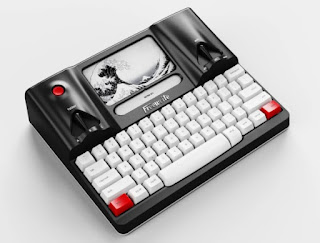
Freewrite Smart Typewriter
https://getfreewrite.com/products/freewrite-smart-typewriter-3rd-gen Well, thanks to this device, my five-year bout of writer's block is...
-
Love is what makes it so hard. But it also makes it so special. It is hard letting go of the things we love. The things which bring us h...
-
 https://getfreewrite.com/products/freewrite-smart-typewriter-3rd-gen Well, thanks to this device, my five-year bout of writer's block is...
 -
Unlike many horror and supernatural stories, in my book, On Black Wings , the government is a friend. The world is ending, the people in cha...