Showing posts with label writing. Show all posts

Friday, April 23, 2021

No Greater Gift

 There is no greater gift than being able to write. The confidence to write. The humility to know your weaknesses, admit them, and suffer enough to work through them. Repetitive practice. Spotting problems. Opening the damn grammar book and practicing it.

Knowing when you are tired and slipping back into old habits.

Dealing with those slow and quiet days, where "not writing" happens one day after the other and you fall out of practice. Knowing on the second day of this happening you better sit down and damn it, write something in your blog just so you don't fall out of habit.

Keeping the habit.

I know someone, a beautiful writer, who can't publish. They have great and wonderful ideas, but they lack confidence and the determination to make their dream happen. I encourage, I do what I can, but I get the feeling they never will experience they happiness of setting something free - and letting people say thank you.

Then there is me.

Probably worse, a writer who can write but won't. Her own hang ups. A tragedy that knocked her out of the game. Giving up. Feeling she can't find the will.

But she can.

She is here doing this now.

I am working on ideas, and finding simplifying them is my greatest ally right now. I had grand plans, but those are doomed to fail when just one tiny part of that great and grand idea would be more than enough to explore.

A tiny piece.

Done well.

I feel at times my ambition works against me. My perfectionism. My grand plans to do a huge this and that. I plan big and do nothing.

I should be planning small and starting.

I should get something done.

Anything.

Tuesday, April 20, 2021

Preparing

I am preparing. I am printing my reference material. Much of it is laid out on my desk.

I write a little each day as a contract, to keep writing even if nothing else is written. But foundational work is being done and things are slowly falling into place.

My genre is in a state of change. There are moments I wish to make it one thing, and moments I wish to go another. Dark or sexy or both.

I am exploring my options. I am coming back, but I wish to come back big. I know that is a recipe for failure, but I want to make something special. To commit. To be here.

And to release regularly. I feel that is the place I need to be, regular releases for my fans. Otherwise, why come back for one book every few years? Futa books for certain, few writers craft them like I do. Also, the dark and twisted works I like. I want to shock. To write words which taste like blood on lips, like the chill of night air on bare skin, or searing heat just out of reach but dangerously close.

A danger to the words which is palatable. One can taste. One can feel.

Something is coming.

Something soon.

Monday, April 19, 2021

Worldbuilding

I find myself world-building again. It is something I do well, having constructed and entire retro-future past for Paris' world in her books. I did similar in On Black Wings and Bowlarama, but to a different extent.

So now I find myself creating, taking notes, categorizing, printing out charts and tables, and organizing my thoughts in a handful of research documents. When I dive into a project with a higher background complexity, I like to be ready since it avoids stalling in the middle of the book. My supporting material needs to be there. My world needs structure. My overall plot and situation need to be laid out in a rough format.

Even things like what is in the world, the items and vehicles, how life goes from day to day, and where people live and how they work are all important.

But Sylvia, you write erotica. How much work do you need to do? Bang out 4,500 words and shove it in the store for $2.99!

I don't write like that. I don't create like that. If I did, I would probably be more successful, but releasing a hundred easy books is not what I do. I write statement books. Interesting things. With a hard edge.

But smart and deeply textured.

I am taking on a new genre. I want this to be special.

This will be my take.

Monday, March 21, 2016

Stop Writing for Yourself?

From the following article, check it out:

https://www.washingtonpost.com/news/comic-riffs/wp/2016/03/21/donald-trump-will-win-in-a-landslide-the-mind-behind-dilbert-explains-why/
“This was a trick I learned from Bil Keane,” the late creator of “Family Circus,” Adams tells Comic Riffs. “He basically taught me to stop writing for myself, which I realized I had been doing — writing a comic that I wanted to read.”
This is a fascinating article from Scott Adams on the Trump phenomenon, and I would like to keep politics out of this discussion and instead focus on the above quote and Adams' pivot from writing "something for himself" to "writing for an audience" and then him finding success.

It is an amazing quote, and also a deeply disheartening one as well.

It is also one that seems plainly obvious.

To find success, must we abandon what we love? I would feel this is the truth, as 'commercial writing' for established genres and groups of readers walks a well-trodden and used path - it is easy to find readers in green pastures. But there is a deeper question here, even if we choose to write for an established genre, must we give up the things we like to write for the formulas and standard conventions of a genre?

It is deeper than holding your finger to the wind and saying, "Oh, this seems popular, now I will write YA books!" It is saying, "My thoughts are less important than the standard conventions of the genre."

In essence, Adams may be making that argument. He writes Dilbert to address the woes and hard life of office drudgery, and those struggles have deep meaning to his comic's readers. He brings a new perspective to the struggle, it is certain, and also a unique brand of irony and humor. Also, in a three-panel comic there isn't much room for expression, so he has to boil a joke down to the essence, but the feeling seems to be still there.

He starts with a premise and best tries to express the irony of that state.

He is not trying to come up with characters with diverse backstories and histories, all of his characters are stereotypes to deliver the painfully obvious punchline. If I wrote a similar comic for myself, I would fill it full of interesting stories, plots, and other elements that would give me great joy to follow along with - with me being an insider and knowing the meanings and punch-lines ahead of time, of course. Re-reading my masterpiece would give me great joy, because I could marvel at my ingenious nature and creativity.

But that doesn't appeal to a wider audience. Most people just don't get it.

If you write about the familiar, you are instantly more accessible.

If you write for yourself, you are shrinking your audience to yourself.

There is still wiggle room here to be individualistic, I suppose. Adams' humor is a unique brand, and he can setup and deliver a joke in the space the size of a credit card. That takes a lot of skill, and yet it still feels like his humor is unique, identifiable, and individualistic. I suppose when you do write for an audience, what you bring to the table is a unique way of looking at the material and expressing yourself within these limits. The required pieces must still be present, the genre conventions, the feeling, and the tone - but your way of expressing them is what makes you special.

It is an interesting statement and strategy for producing creative works, not to "write for yourself" yet still produce something that is individualistic and unique, with a  perspective and voice that appeals to the established fans of the genre, as in this case, office humor.

It is also an interesting statement in the practice of "writing for yourself" and setting expectations for that practice. We all think we are geniuses, yet many times, the world doesn't seem to think so at all. Our brilliance only shines when we illuminate something with it; and in this case, Adams' brilliance shined when he turned his spotlight of humor on the world of cubicle politics and office life.

Saturday, January 16, 2016

Yes, Anyone Can Do It

http://www.pbs.org/newshour/bb/what-makes-a-photographer-when-everyone-is-taking-pictures/

This.

If you were ever wondering about that question 'what makes you special' as an artist or writer it is this. Let me quote:
There are a lot of things that make a good photograph. You have to think about texture and gesture and composition, and all the things that painting has in it. Technology doesn’t change the way photography is. It just — it makes it available to more people, which means there’s going to be much, much more really terrible pictures taken or pictures that are totally dependent on subject, which is all, all right.

If you were there when the Hindenburg caught on fire, and you took a picture of it, that’s a great photograph. But you’re not a great photographer, because you can’t repeat that in everyday things.

What a great photographer does is, they are consistently able to make something in a style that’s personal to themselves. My pictures don’t depend on extreme sharpness. They depend on the composition and on the subject and on the way I see it.
Let me paraphrase this as a writer. There are a lot of things that make a great book, plot, voice, and pacing - just like a photograph or a painting, there are essential and universal qualities to a piece of writing where we can say, yes, this is a great book.

Technology does not change the nature of books or great writing, it just means the technology to write books is available to everyone, which means a truly staggering number of terrible books shall be written - but that is all right, and perfectly fine.

Everybody is free to try, and everybody starts somewhere. Show me a great writer and I will show you someone who started out by writing terrible books. There is nothing wrong with this.

Let's get to the central and most powerful idea, although those two preceding ones are great in their own rights. The fact there are pictures totally dependent on subject. Mr. Van Sickle gives the example of the Hindenburg, if you were there at that moment and captured that, then yes, that is a great photograph since you were the one who captured this first, or were the only person who did so at that moment in time.

Let's look at famous books, such as Fifty Shades of Grey, The Hunger Games, or even Harry Potter. Those were the firsts, and they created genres of writing which are like the "subjects" our photographer friend speaks of. Endless books covering these same subjects came out after these books were released, and most all of the books copying the first books in these genres seek to endlessly copy the subject matter of the original hit books.

What makes you special is not the subject matter.

Think about that.

Anyone can write a Fifty Shades knock off. Anyone. Just like anyone can point a camera at the Eiffel Tower and take a great photograph. Isn't that a great and worthy piece of art, just by the nature of its subject? But yet, billions of lousy pictures of the Eiffel Tower exist from the dawn of photography all the way to today, and for as far in the future as you can see. So what is the difference? I think Mr. Van Sickle says it best:
Your ability to consistently make something in a style personal to yourself.
That. It is not your subject matter that matters. It depends on the way you see things. It depends on how you express things. You ever wonder why these books come out, first in a subject, and then they do so well and everyone criticizes the writing or the tone and it is universally panned yet it does incredible sales? Why?

It is that picture of the Hindenburg. It is being at the right moment at the right time. Your skill as a photographer matters less than being at the right moment at the right time with the camera loaded or the book ready to go and pressing that button. Everyone and everything else after this magical moment shall be copying you. That is the power of the singualar moment and being able to recognize it.

But we are never guaranteed being the first, or being somewhere at a moment where the mere presence of being there or having the right book at the right time. So what makes us, as artists, special? What makes people come back to us, time and time again? It is not that we can repeat others, because everybody can do this. The technology makes it trivial.

What makes people come back to us is a vision, an ability to take any piece of subject matter and transform it into "a style personal to yourself" and share it with the world. If people react to that style, you connect. People come back. They seek not just one book of yours, but all of them. It takes something deep inside, an ability to look at something in this world and turn it into a unique creation where your personal style shines through.

Your personal style and ability to see and transform your thoughts into words is so much more important than your subject matter.

Technical skill matters. You can't go around writing books full of errors or taking photographs out of focus. You need to be able to deliver what's inside your head.

There is nothing more important than these two facts.

Subject matter is a secondary concern to an artist. To a commercial writer where you are doing genre fiction, of course, it is a primary concern.

Monday, January 11, 2016

Distraction Free Writing

It sounds like an impossible dream, right? Distraction free writing? How much would you pay for not having notifications pop up, take you out of the moment, pull you like a siren into Facebook, and before you know it, four hours is gone and you are feeling like an idiot for having wasted so much time. To me, it is worth spending some time looking into and putting money into, because distractions whittle away at my productive writing time, and in a way, distractions cost me money.

It is ironic modern operation systems such as the Mac and Windows platforms struggle to make your digital life easier by automating notifications, you know the top-right stacked menu on the Mac or bottom-right chat-bubble icon on Windows that slides out the right-side notifications window. Hey look, all my Twitter and Facebook notifications are right here! It's amazing stuff, and also an absolute productivity killer. Facebook, web games, real games, notifications, news flashes, beeps, boops, slide-out ding-dings, and all sorts of other "hey look at me!" widgets constantly fight for our attention.

Could you imagine having all these notifications turned on during watching a movie? How could you enjoy it? The same thing goes with writing. I want to lose myself. I don't want a window behind a window peeking pout at me like some attention-starved child. I don't want a constant stream of...

...wait, okay, I am back, sorry about that, Facebook notification, someone posted a reply to my post. Where was I?

Oh, apologies for that, so here are some of the popular alternatives to writing on a PC or Mac that I have found, along with some of the ones I have used to write my books. Note, some of these are very hipster, out of date, and strange devices, so you have been warned.

AplhaSmart Neo and AlphaSmart 3000 

Pictured above, these devices have ceased manufacturing, so people are buying up four or five at a time just to keep them around for the next ten or twenty years. I couldn't imagine doing that, but I can see the appeal. These are really basic devices where you can only see a one or a couple lines at a time on a primitive LCD screen. Where you are is where you are at, and you cannot see a full page of text, so this would be an ideal device for stream-of-consciousness writing. They were popular back in the 2000's for journalists and on-the-go types, and they transfer files via USB so you can get your work off.

I have never used one and I do admit that I see the appeal of these. I like the idea of just seeing the last line and focusing on that moment, and I could see how limiting your view could be a huge productivity boost. These things do not do anything else but provide a keyboard and last line view, so they would feel great for banging out that first draft.

My problem with these is longevity and file security. I would be very hesitant to put 50,000 words of a document on this device and have it be the only copy in the world, if it breaks or fries its brains, you are out of a lot of work. I really like automated backups and cloud saves, so if you used one of these you would have to adopt a backup policy of taking your work off via USB after a work session. it doesn't feel ideal to me, and I would love to have a cloud-enabled version of one of these.

The price is right at $20-50, but I don't like the "if it breaks you are out of a device forever" feeling. I want to be able to replace my tools, and I don't want to have to horde inventory of these devices to maintain a preferred work environment.

Hemingwrite

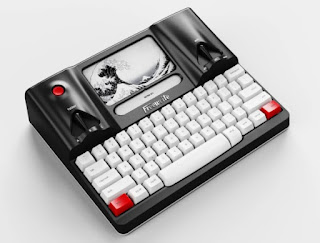
Check this out, a modern e-ink recreation of a typewriter with cloud-enabled backups. It's called the Hemingwrite. and the Kickstarter campaign completed last year, and they say they are close to shipping manufactured units this year (this month in January 2016, in fact).

I feel in love with this thing when I saw it, but at around $500 I instantly had second thoughts. That is quite a bit for a dedicated device, but I can see the appeal. I would love a screen that adjusts and also a cover for the device, since I can't see this staying nice for too long with a naked top exposed to my bag and daily life.

The could-enabled sync and and re-sync back to the device is wonderful, and I love the workflow they built into this device. I also am in love with the quirky typewriter-like design, it just seems silly and kitschy but it has an appeal I just can't put my finger on. Any device that gets me into writer mode and makes me want to type is a winner in my book.

The e-ink screen is also wonderful. I would love typing on something that doesn't glow, and even though the refresh rate isn't millisecond perfect, writing on a paper-like e-ink surface would be so cool and reduce eye strain.

When writing is all I do, maybe I shall take the plunge. I can't see spending that much on a dedicated writing machine, and we are also in a super early stage for this device. I would want to wait for reviews, if they are orgasmic and super positive, I would jump in and buy. If not, I would want to wait for a version 2.0. Still, this is one worth watching.

Recycled Netbooks (Ubuntu Linux)

Let's go DIY for a moment. Take an old netbook, install Ubuntu on it, setup a cloud sync via Dropbox, and set LibreOffice to a dark green-on-black color scheme and go fullscreen. I did an entire 30,000 word book on one of these in a day and it held up wonderfully.

I am not really worried about the world running out of Netbooks, most of these were built like tanks, and you can pick them up (or take them off people's hands) for very little cost. They still make them today, so if you wanted one new you could go that route.

The cons? You have a web-browser and apps, so you need to be mindful about distracting yourself into an unproductive state. Multitasking is the direct enemy of productivity, and it is a state where you think you are getting a lot done, but in actuality you are just sucking at everything you do. The good part about a netbook is the processor and small screen on these things really can't do anything well, especially anything beyond basic browsing, so you are just left with writing and editing. Seriously, these things are worse at web browsing than a smartphone, so there is a built-in punishment factor if you choose to br-br-br-owse Fa-Fa-ce-ce-bo-oo-ook all day.

I also highly recommend cloud sync with these devices. They are still old, and you don't want to wake up, turn the device on, and have it give up the goat on your 50,000 word manuscript. Document security and backups should be a priority for you should you choose to use something more than  couple years old, because you don't want to be that writer on Facebook saying "I just lost all my work" because of a hardware issue. You don't want to be on Facebook period if you are writing, but that is the point of this article.

I will also place recycled Ubuntu Netbooks in the hipster category of devices, because they do lend a bit of street cred to you. You have to be savvy enough to install Linux on the device without a CD-ROM, be able to setup a distribution (it's not hard), get it configured, and learn the system (not hard, again). Once you are done, you have a very hip DIY project computer that you recycled from contributing to e-waste (super hip and cool and progressive), and that has security updates and a modern OS. Cover it with hipster stickers if you want, the more the better. If you continue to use Windows XP on these devices you will be a lamer and not a cool hipster, and also putting yourself and your work at risk.

Chromebooks

I like Chromebooks. Even after Windows 10, I like Chromebooks. I like not having PC gaming and avoiding all sorts of Windows and Mac distractions flying at you. With distraction-free apps like Calmly Writer, you can setup your Chromebook to be a single screen, dark-screen, super productive writing device with nothing else but you, a keyboard, and your text. Distraction-free writing apps exist on Mac and PC too, so it is worth checking them out should you want to go that route, but we know the PC and Mac are full of distractions, so we don't want to go that way unless we really need to.

The great part about Chromebooks is that they are replaceable, cheap, good quality, and cloud-sync all the time. The bad part is that 90% of your distractions are still available to you, and you have a modern and fast computer to access them with. This is where a little-bit of self control comes into play. You need to put your writing app front and center, and not turn the thing into a distraction and app-filled mess. Yes, you could have this level of self-control on a PC or Mac and save yourself some money, but in my experience, you rarely do.

I feel there is such a thing as a primary workstation filled with all the necessary distractions of life, your games, your social media, your email, and those things we choose to wall off and make our productive spaces. To me, my Chromebook is my walled-off creative space and a place I can get some great work done. It is not my PC, it does not have the functions of a PC, and it is just here for writing. I made that choice and I stick with it, despite all of the distractions available to me.

It is not a very hipster solution, admittedly. But the world will never run out of Chromebooks, and if yours breaks, replacing it will be an easier thing. I like their inexpensive and replaceable nature, and also they are secure enough where if I lose mine or it gets stolen, for the most part I can forget about it and move on with life. A $1,500 laptop does not travel well because you are worried all the time about the damn thing. With something cheap and replaceable, I can enjoy life a lot more. That may qualify for a couple hipster points, living within your means and not being overly consumerist.

Dell makes some drool-worthy business class Chromebooks in 11 and 13 inches that make me fall in love with the concept all over again. Yes, they are more expensive and have full HD screens and i3 processors, so they kind of nullify the whole cheap and replaceable points. As a primary business machine I would seriously consider one if I were not so tied to Scrivener for final editing and e-book creation.

In Summary

There are a lot of options out there for distraction-free writing, and even apps for Macs and PCs that can do the job quite well given a little self-discipline. For me, I find maintaining a distraction-free environment difficult on a main workstation. I don't feel modern OS'es are well setup to provide 'distraction free' modes, and they by their nature encourage productivity-destroying multitasking. Modern PCs are wonders that do anything and everything well, and sometimes just having those options presented to us all at once paralyzes us with too much choice.

To have a device that I purposefully limit, either through design or the choice of how I use it, is important to me. I find it increases my productivity, and it encourages me to write. The machine becomes my 'creative space' where I do one thing, and I do it well. For some, they choose to use primitive devices to get the job done, and if that works for them, great! For me, I like to be a bit more practical with an eye on freedom and file integrity and security. I rarely work without offsite backups of anything, since I value my time and want to protect my investments of it in my work.

Distraction free writing is an interesting topic because in a way it is so personal. What works for you is what works, and it likely isn't the same for everybody. Some of us could probably use a distraction free app on our workstation and it gets the job done, while others could just put Word in full-screen mode and happily type away. For others, we like creative spaces that are isolated from the rest of our lives. We like the quirky and the hipster devices, because we realize that inspiration can com from external factors, and yes, even the device on which we choose to write. If it makes you a better writer, go for it. There are a lot of feelings involved and not necessarily logic, so you can't really apply some sort of hard-and-fast rule to what works for you.

Writing is art, and the artist's choice of tools matters in both technical and subjective ways. it is that subjective part that fascinates me, because part of me feels what I write on matters in a way. There is a focus there, and also an inspiration that I want to capture and kindle. It seems silly, like it is just feelings and soft fluffy stuff; but at least for me, how I do things and where I write them matters. Yes, I can write anything anywhere, but at times I love the odd and quirky, and the removal from the ordinary workflow and everyday distractions inspires me to greater creative moments.

Thursday, December 31, 2015

Project Vampy Black: Back On Track

I am currently working on Darthaniel Black's Vampy Black project and getting that edited and ready for release. It is a fun book and I am currently working through the end chapters on clean-up. This is currently 42,000 words so it is a sizable editing job, so I expect another week or two of work before I am ready to put my editing signature on this and hand it back to Darthaniel for release.

I am done two of my back-project books and they are doing very well, and it is time to push this though and finish work on it. Nothing feels as satisfying as actually taking something that has been sitting there for a while, finishing it, and delivering. It is always easier to start something than it is to finish.

So get ready for some fun, sexy, fang-y, and action adventure-y urban fantasy from one of my favorite dialog writers, and also a friend who helps me run my projects. More on this soon.

Thursday, December 24, 2015

Upon an Ocean Together


If you get a moment today, read that. This is one of part of my Workshop series over on e-read, and I am told it is beautiful and inspiring many, writers and those who create.

Friday, December 18, 2015

iA Writer and Narration Tense


I love this app. If you have a Mac, iOS, or Android device, it is worth checking out iA Writer. It is one of those "distraction free" writing apps for the Mac and iOS (and they have a version on Google Play for Android), but with one incredible difference.

You can auto-highlight verbs, nouns, adjectives, adverbs, and conjunctions.

You type, and all those pesky verbs are highlighted, and you can check things as you go against your little black book of rules. Now, I love Scrivener for its organizational magic, but when I am in the down and dirty of editing and ironing out verb tense, nothing else comes close to this app.

Nothing.

I narrate in two main styles, a present tense style which I call careful tense, and the standard novel-style past tense. My characters speak in all tenses, so they are free to speak as they wish. There is one overriding rule for careful tense narration, it is that all statements in regards to verbs and times must be true. I can thus narrate like this:
I walk down the street and enjoy the warm weather. Yesterday, I walked down this same street in the rain and got soaked. I will be walking down this street when he leaves tomorrow. I arrive at the bus stop.
Mixed tenses all in the same paragraph with a default present tense-narration, but all statements true in regards to the time they were stated. Some of the statements are in past or future tense, but they relate to facts the narrator is relating to that happened in the past or are expected to happen in the future. If you are doing past-tense narration, you would write the following:
I walked down the street and enjoyed the warm weather. The day before, I walked down this same street in the rain and got soaked. I would be walking down this street when he leaves tomorrow. I arrived at the bus stop.
Present tense assumed the narrator is speaking now, where past tense assumes the narrator is relating events which happened in the past. There is a good reason novel writers use past tense, because switching tense in your narration can be a tricky thing. It is easier to stick to the past tense throughout, and ignore the present tense unless a character is using it in dialog.

I am using traditional past-tense narration for my CLS Romance Project since it is a traditional fairy-tale type story, so I need iA Writer to double-check my verb tense. It helps a great deal, since I can zero in on my verbs and check each one to make sure it is using the correct form of past-tense, and ensure I don't fall into those "had been" and "have been" issues when I am supposed to be speaking in the past tense.

I love writing in the present tense though, or at least my careful tense style. I love the books written in present tense and how they feel, like 50 Shades and the Hunger Games, there is just this immediate and gripping style when a character-as-narrator says:
He grabs me and kisses me.
You are right there, and it is happening now.

Now I will say if you do any amount of mixed writing, where some of your books are narrated in the past tense and others are narrated in the present, you are setting yourself up for disaster. It is always the best to stick to the style you love and get used to that, because once you start switching narration modes, you will find yourself slipping past tense verbs into your present tense narration, and the other way around.

But if you are learning this stuff, trying to develop a past or present tense style, or find yourself constantly tripping over verb tense, get a Mac, iOS, or Android device (sorry Windows), and check out this app. If you need it for proofreading, cleaning up excessive adverbs, or just a double-check of your inner editor's sanity, check out this app.

Highly recommended.

Thursday, December 17, 2015

How to be a Writer

Six easy steps, done every day:
  1. Write!
    1. Just write, edit, or push something along until it's done.
  2. Organize!
    1. If you don't feel like writing today, organize your projects!
    2. This is a trick, because by going through your projects, you will find something you love and jump into it.
  3. Study!
    1. If you don't feel like organizing today, study!
    2. Practice makes perfect, and self-help books really help.
  4. Read!
    1. If you don't feel like studying today, read!
    2. You owe it to yourself to be reading every day, because it makes you a better writer.
  5. Market!
    1. Do this after you do something in steps 1-4.
    2. You need to make money. 
  6. Community!
    1. Do this after marketing.
    2. Become a part of a community, review, and help others.
    3. When you need help, you will have someone there.
If you need a break, take it. You cannot expect to do good work when you are burnt out. If a project is stagnating, put it aside. There is a value to finishing something, but maybe it needs more time to simmer. Don't get into the habit of starting things and never finishing them though, even putting out half a book is better than putting out none at all.

Wednesday, October 14, 2015

Less is More

I want to experiment with writing less. With making fewer words mean more.

I want to boil things down. To make each word count.

I find more difficulty in being concise with being verbose. There is meaning to impart, and with less words, how is that done? Words must be carefully chosen. The statements I make must be strong enough to stand alone. To excise the extraneous. To trim excess.

To know when to leave something well enough alone.

For a point and a book can become belabored. It can overstay its welcome. It can become too much of a commitment for a reader's investment. It can wander. It can revel in the writer's own wit far too much.

There will be less of what I say, but what you get will be the very best. It shall not waste your time. It shall not wander. It shall not waste its energy carrying fat-filled and self-important prose. In our super-sized world where expectations are delivered in wholesale-club sizes, it is a seemingly impossible task.

To write less.

And to mean more.

Tuesday, August 18, 2015

Getting Back Into the Swing

It has been a while, but I am getting back into the swing of writing. There have been too many distractions lately, and the constant din of the day after day can drag on you.

Yes, the new keyboard is wonderful.

I may have some voice dictation updates to report on soon as well, but I need some more practice and data to make a final verdict on the product. More on this soon.

Refocus time...that is helping. More on a couple projects very soon as things ramp back up.

Sunday, August 2, 2015

Summer Cleaning is Done

Oh, am I tired, but it was worth it.

My keyboard is clean, my workstation shines, and my environment is shiny and new. A printer no longer boxes me in. Desks were moved. Dust was removed by the bucketful. A window is closer. More light flows in. Cables have been bundled and tied. Computers were moved, cleaned, dusted, and everything plugged back in.

Where I work is new again.

I hate getting into a rut, and having a place to work so cluttered I can't think my way out of it. this is good. It is new, and it is clean. Is it perfect? No, the keyboard I replaced my old one with isn't the best, so I am looking to replace that with something snappy and fresh.

It transfers to your work, I know it does. You can't be in a negative place and do your best work, and putting in some sweat and cleaning into the place where you create is a part of the self-improvement process. You have set yourself up for creativity and success. You have cleaned things up. You have made where you dream a better place to imagine and create.

Even my piano is within reach, dusted, and ready for life and sweet music. I am a happy person.

Will it get stale again? Most likely so. In six more months I shall be back here again, and my creative space will be dingy, and my energy drained by untidiness. But for now, it is spring again, and where I work and what I do has a fresh look and a clean feeling. It is a blank sheet of paper where I shall take my next steps. It is mine again.

Now, for a nap.

Wednesday, July 8, 2015

Short Stories

I love short stories.

There is no better format for writer development than the short story. I started my writing career writing short stories, and I shall continue to do so in the future. Short stories allow for greater reader feedback at a more rapid pace, and they allow writers to explore their craft without committing to a full-length novel each time.

I love writing short stories.

Short stories are harder to write than novels. With a novel, it's time. With a short story, it's focus. A writer has to be very crafty to get everything in and in a concise form with a short story, there simply isn't the time to dawdle around and let things slow simmer. This takes a lot of experience and writer skill, and keeping things moving and to the point tests your skill as a writer to pick out what is the most important and be very expressive with the few words you do have.

I love reading short stories.

Yes, I do. I don't feel 'ripped off' because a story is short - not everything needs to be a 300-page epic with fourteen books in the series. I enjoy the short format just like I enjoy TV shows that are a half-hour, like comedies and other quick-bite shows. I like sampling writers, and reading shorts. I like it when a short captures my imagination and leaves me wanting more. I love the free-form and experimental nature of short stories, and the freedom they give us as readers to experience a new world in not that much time or commitment.

I love episodic short stories.

I know there are some that feel that these make readers wait, or this is trying to make more money off one idea, but I still support them and write them myself. I love episodic works, and I love waiting for the next installment. Like a TV show 'you have to catch the next one' that only comes every week, these are an addiction of mine and I love the anticipation. I also like the time they give writers to explore the idea, see what works, and make changes 'mid-season' to make the entire experience for the reader better.

Quantity does not imply quality.

This said, short stories as a shared and creative genre may be in trouble. We have had some recent changes to book-borrowing services (such as Kindle Unlimited) that pay writers by the page read. I felt this was a good move, but it could put writers of shorter stories as a disadvantage - or make them feel that 'longer is better' just so they can get paid what the system thinks they should be paid. Putting an emphasis on length is dangerous, and at least the system goes by 'pages read' instead of length borrowed. With read pages, if a writer puts out ten short stories and avid readers read them, this is the same pay as one story of 10-short story equivalent length.

It is all very early to start panic or making judgments, since it is still too early to tell what is going to happen - so we wait. I would hate to see short stories start disappearing from book-sharing services, since this is where I want them to be. I want short stories out there to sample, and to discover new writers. I want episodic content released to enjoy, and I like the shorter formats.

I don't want to see 300-page anthologies of random short stories, forcing me as a reader to do the sifting and sorting to find the gems in the junk. We don't need to super-size our books, or cram everything into a giant burrito and call it a meal. I like being selective, finding an expertly crafted miniature masterpiece, and enjoying it in the solitary vision the writer intended.

Sometimes, a lack of quantity is a quality all in itself.

It takes skill to cut the crap out. It takes skill to present a complete idea in a short format without wasting space and adding in content that doesn't deliver an experience relevant to what we came to see. Where would horror be if HP Lovecraft had to write full-length novels instead of his mystifying and chill-inducing short masterpieces? With shorts, we are left with that sense of 'more and wonder' that certain genres need to thrive on. In editing, we boil down, and we cut to make a story better.

Everything 'not' the story should go. That is editing.

I can think of many books that would have been improved to a great degree with more cut out, than more added. Yes, our hubris makes us think as writers that readers will hang upon our every word, and thrill at the smallest and meaningless detail we add about a character's life or the history of a place we bless a reader's eyes with - but the opposite is often true. The more we cut, the better something gets. The more fat and gristle we cut, the better steak we deliver to the table. The more intense the experience, and the better experience the reader will have with every bite.

Readers do get bored, even the ones who love every word we write. We need to make every word count, and this is why the short story is so difficult to craft well. This is also why they are important. Now, there is also an issue with under-developed stories being too short and bland, but this is something else one discovers when a short story is crafted. It's easier to see, and it is easier to take in.

I hope focused anthologies of shorts arise, put together by collectors who know what needs to be said and delivered, and I hope the short story lives on. I hope readers value the short and continue to read them all the way to the end, give feedback, and support the genre.

The short story is not dead. How they were being sold and marketed may be, but I sincerely hope writers of short stories continue on to thrill us, challenge assumptions, and deliver bite-sized, intense experiences that change our perceptions and expectations.

Sunday, June 28, 2015

SCL Project: That Thing? Found It.

Yes, I knew it would come to me. Last post I was taking it a bit slow to find that missing element. Today, it came to me, the plot element that ties together the point-of-view change, why this new character is needed, and how this will work in the end of the book. It was one of those moments where you have to sit there, you know you want this next turn to come, but you want to make it abundantly clear why this is happening.

You may not tell your readers that now, but by the end, they will get it.

It matters because you want to have the 'secret understanding' as you go forward and write what you write. Because if you keep the plot twist in mind before it happens, you can write for it a lot better. It may be less like a formal 'plot twist' but it is more of a 'why this is happening' sort of thing. If readers figure it out ahead of time, great, if not, they will have a fun surprise waiting.

It is also one of those 'sea change' moments that happen in books. I like it when a story turns and you are in a whole new world, it gives us a break and sets things on a different course. This is important with the new character and the PoV change, and having this 'shadow reason' of why this character needs to be involved will help me write everything that comes after the switch. This is my 'hidden roadmap' and I expect to be having a lot of fun writing for it in the chapters that are coming up.

I am up to 14,000 words, so I have made some good progress over this slowdown, but now that I have my motivation and the plot twist planned out, I expect my speed will pick up and I will be writing at an increased rate. I can feel it, and I will be thrilled if things pick up and I have those super-productive days again.

These lulls happen, and you have to power through them. The worst that happens is you stall and quit, and that is always a risk. To avoid that, you open up the story each day, and make small edits and changes - visiting with your story each day is crucial to avoid stalling and abandonment. You need to keep the words and characters in your mind, and you need to be checking in with them every day until you finish and go into editing.

You do make a commitment when you start a project, and part of commitment is giving your story the time it needs, and a little bit of each day to care for it and help it grow. Like plants, children, or anything else that needs care, a story runs into tough parts and stumbles from time to time, and this is where patience and especially sticking with it pays off in the long run.

Monday, June 15, 2015

SCL Project: Work Begins

I don't believe in shelving an idea, because they rot. You either start it fresh, or throw it away.

So over the weekend a new novel project hit me, and I dived in.

I started by making the cover, and it sang to me. I just started throwing together pieces of the sample images I could find and I built a mock-up that made me smile. I also came up with a title that absolutely rocks, it nails what the book is about and it encapsulates the plot of the book perfectly.

Once I had the cover, I started throwing around the ideas.

It took a while, I knew what I wanted the book to be about, and I knew the general plot. I mentioned this to Darthaniel, and he came up with a totally different plot he thought the book should be about. His ideas has a lot of merit, so I took them and mixed them with my ideas, and now the book is perfect.

The book is so fun, and it has things in it that people universally say they love in my writing. It also has characters familiar to some, so this should be a treat for my fans.

I do have a choice to make, and it's pretty big.

Mainstream or erotic-romance?

This is a big choice for many reasons, well two actually, so I am diving in and holding off my decision for as long as possible. Is the book strong enough to sail without the sex? It certainly is. Would it be really, really fun with some spicy scenes added? It would in fact, fit perfectly.

Now even with straight romance you have a lot of leeway in spicy content, and then you can go to erotic romance, and then straight erotica. I am not doing this as straight erotica since it is not entirely about sex, but it is set in a world where writing the sex out would feel artificial and sterilized.

So there will be sex in the book. How explicit this will be is going to have to be a decision I make. It will also be a very tough decision if I do what I am planning on doing with the narrative. This is my second agonizing choice, but one I know readers will love since I do it all the time. Just not in this way.

And I completed 4,000 words today in the first two chapters, and the story starts off with a bang.

And I shall keep writing until I have to make that choice.

I am still editing Vampy Black, and I hope to get that done and back to Darthaniel soon. But the idea struck me, and it carried through to an amazing start I am super happy with. I will share more when I get work done and things get towards release, but this is going to be a fun one.

For now, I shall call this the SCL project, and keep you updated with as much information as I can. More soon.

Friday, May 29, 2015

Vampy Black: Editing for Characters

"Is she an incompetent, clueless, or is she just overworked and careless?"

This was the subject of a heated discussion between Darthaniel and myself regarding an important secondary character in his Vampy Black project book that I am editing. I read the chapter and I initially came away with revulsion at this character's actions, and I frankly disliked her a great deal. Now, that is a good thing if we are supposed to hate this character, but there was a question in my mind if that is what Darthaniel wanted.

Sharing impressions is a very tough thing when you give feedback. I am normally pretty blunt and upfront about my feelings, and I understand that can cause friction. We did work through this, eventually, but it is always a tough thing to share your "coming away feelings" about something and separate that from the technical analysis. It's not that I want you to change anything, this is how I feel, and I need to know if that is what you expected readers to feel.

If not, then we have a problem with what was communicated with that chapter, and the impressions and "take away" is all wrong.

So I shared my feelings that this character could be so clueless and flippant about a seemingly important job for our putting-it-all-out-there main character. It made her seem petty, and also putting the main character at risk for her own vanity.

But that is how he wanted her. So yes, this character is putting our main character at risk, but the key point is - it is not being done purposefully. This character is troubled, stressed, inexperienced, and overworked, and that needed to come across without the reader leaving with a massively negative impression of her.

Mission accepted.

So that's how I started, I went back through and made sure the trouble spots were a bit more clear and shown to the reader. Enough was shown already, like her being flippant with a request the main character needed, but there wasn't enough other stuff to show that this character's personal life is truly a wreck and she can't deal with everything coming at her. It's one thing for someone not to pick up the phone at a critical moment, it's another if there are fifty things going on and she doesn't pick up the phone.

In the first case, the reader comes off with the impression that character is lazy and careless. There isn't much going on, so why didn't she pick up the phone? She must be a careless bitch, right?

In the second there is a ton of stuff happening, so we understand a little better why she didn't. We can relate to that, and we actually get a bit of sympathy for this character because her life is a lot like our busy ones nowadays. We are shown the hell this character puts herself or lives in, and we know how that is.

Like Johnny Depp, I need to immerse myself in the character to do meaningful work for them. I need to get inside that character's head, rather than just going by what I see. I need to become them for a while in order to edit the chapter, because I need to share that point-of-view. Even in third-person writing with a detached perspective, I need to be able to be inside the character for a while to get across that character's inner workings. This is the only way I can edit for a character and be true to who they are as a person, and then try to communicate that to the audience.

So I will grill the author, and in this case Darthaniel. I think we had a two-hour discussion on this character where I pulled out everything I need to know about this secondary character, and I began to understand what he had in mind for her. It was a bit difficult to get across my feelings that I did not like this character in the draft form, but we managed and we worked it out. Once I understood what he wanted, I was ready.

We did the read through last night and he loved the revised draft of this chapter. It captures his idea of the character perfectly, and it also addressed my concerns that readers may come away with a negative impression of her. It makes her a bit sympathetic, but it also raises the stakes for our main heroine because this supporting character is now on shaky ground and could make a serious mistake. The tension is raised, we don't come away with a negative impression, and we actually feel for this secondary character and understand her a little better.

Most importantly, nothing from the writer's original vision was changed.

I didn't want to change the character, only clear up a chance for a bad impression the writer may not have intended. I didn't want to change the story, only strengthen it. The author's intent is gold, and I helped pull that out and show the reader this character's troubles. This was a huge win for everybody, and we are both very happy with how this chapter came out.

This was an interesting experience, and one I though worth sharing with you all today. It involves the dynamics of working with people, differing visions and expectations of a chapter, and even different perceptions of the same words that we had to reconcile. What made this easy was identifying author intent, and sticking to that as a golden rule.

Wednesday, May 27, 2015

Vampy Black: Supernatural Terror and Magic

It's fun writing supernatural terror.

Where the world starts to shift, senses shut down, and what was assumed safe is possibly now a deadly threat - if only in the character's mind.

I had a chance to edit a section in Darthaniel's Vampy Black book where our heroine meets the forces of darkness for the first time, and she has this strangely odd Lovecraftian moment where she needs to do something secret in plain sight of a large group of people, but a wicked force of dark magic starts to affect her senses.

It's the moment in the book where everything turns, and you realize Kansas ain't this place anymore.

What was once a normal scene of collecting information and fighting with a friend becomes a moment of sheer terror and strange feelings of death and fear. It's almost alien in a way and I love the effect it has on her. In all likelihood this is magic, evil magic, and this isn't that first-level Magic Missile spell anymore out of fantasy games. It's alien, strange, like some sort of unknown radiation affecting her, and it's terrifying.

I like my magic to be strange and unexplainable. We live in a world that robs us of the unexplained, the moments of confusion, and the mysterious. Everything is explained in some tech site somewhere, the specs are laid out for us to see, and every mystery is explained using CSI science and theory. Even today's pop-culture MMO and movie 'magic' is mundane, some sort of consequence-less superpower that instantly flicks a mana bolt at a level 60 ogre again and again with no mystery, no consequence, and no strange effect on reality.

Magic should inflict a sensed of fear and wonderment. It should not be explainable. It should challenge your assumptions about reality. It should underlie danger.

It should not be of this world.

Instead, pop-culture magic is like our iPhone, easily accessible, predictable, easy to use, powerful, and dare I say it, boring as hell. It's the flashy CG of seen-it-all movies. It's a light switch to flick and never think about. It's not magic anymore because it's not magical.

But...real magic. It is that moment you realize something is out there and likely more powerful than you, and you realize you have no hope of explaining what just happened. There is a fine line here with pulling wool over a reader's eyes, so you have to write it carefully and with some semblance of order. But that hopeless moment of terror where nothing you know can help you anymore - thrills us. It kicks off the roller coaster, and we as readers we love these moments. Things start to get flipped on their heads, and our expectations and minds race at the possibilities.

I wrote magic this way in my On Black Wings novel. Most of the things in that book aren't explained, and our heroine goes through so many jumps to try and explain something that is inherently unexplainable. It's all terrifying, uncontrolled, and also a metaphor for how out of control the world seems right now. Even her powers are a mystery, and how they work are never really understood down to a science. They remain strange and a force to fear, along with what happens to her on a moment's notice because of rules and laws our minds cannot comprehend.

It's a respect of the force "greater than us," and it puts magic back in its proper, mysterious place again. Magic becomes something greater than us, and that makes that strange and unknown force becomes...magical again.

Sunday, May 24, 2015

Vampy Black: Cutting Down Monsters

I am still editing Darthaniel's Vampy Black project novel, and I am hitting a huge 5,000 word monster chapter today. I am cutting this one up into at least two or three chapters, as I dislike long-long chapters as both a reader and an editor.

I will blame MTV and shortened attention spans for this one, but there are some good points to this practice.

In a literary book, I don't mind long chapters if they are gripping and immersive, I will gladly lose myself in something deep. In an action or thriller book, I mind long chapters because you want to keep things fresh and paced snappily. There feels like too much information here, and I will either start cutting or dividing, and in this case, both.

Chapters provide a rest, a natural break where you invite the reader to put the book down and pick back up later. I want chapters in books with a quick, snappy pace to be shorter, and feel like they get to the point and deliver the next slice of action in a timely and concise manner.

Now in a book like a Stephen King novel, I don't mind longer chapters because you are wading through a sea of greatness. There's a trust there with established writers that allows them to write chapters however long they want, because we know it's going to be good, and we trust them to deliver on the long hauls.

With newer writers, and especially e-reader books, I feel the need to keep things punchy and short. We don't want to overload readers unless what we are writing is truly and unquestionably great, but the burden of chapter length runs against us as new writers. One of the big faults of writers is we tend to think everything we say, no matter how trivial and informative, is worth our reader's time.

This is the curse of hubris.

Of course everything we write is special! We are letting them look into our magical world, and every fact, no matter how trivial, should be treated as a treat and an honor that we shared it with dear reader! Even if the fact has nothing to do with the current situation, they should feel entertained and privileged that we chose to share out wit and majesty as a writer with them!

In reality, this is like laying out a wonderful dinner on the dining room table, and then covering every square inch around the food with chocolates and candy in case someone wants to have a sweet after dinner. Or during it. Or before it. What was once a beautiful spread of food and delicious presentation becomes a travesty of culinary disasters, and the entire spread looks garish and the candy and treats take away from the food's presence. It's too much food, unfocused, and now none of it goes together.

Clear the table, put the candy away for Halloween, and just put dinner out. That's all your guests want. This is what they will remember the night by. Just the food, not the flourish, and certainly not all the extra treats you laid out for them because you fear you would be a lousy hostess if you hadn't.

It's fear again, isn't it? The fear our readers will not like us. It's the same fear that drives our addictions to adverbs and alcohol. We need to put treats and random factoids out because we fear readers 'won't get it' or feel what's there is sparse. Guess what, if it was sparse before, it will be sparse with any amount of empty calories added to it.

Also, we feel the need to load up the table with the great stuff. Why not have a roast, and a turkey? Let's put a ham on there as well! Longer chapters are better, right? Let's make every side dish we can imagine, and put one on every square inch of empty tablecloth.

Same problem. We fear our gusts won't enjoy what we serve, so we give up and serve everything. Everything we make is special and we expect everyone to enjoy everything we create, right?

Instead of a focused meal where everything goes together, we give up and take our guests to a buffet. There's a time and a place for that, but not when we are trying to deliver a dinner we want people to remember. So again, it's fear.

Our guests wanted turkey and stuffing, with yams and potatoes. They expect corn and cranberry sauce. The hamburgers sitting on the table are great, but they don't belong, and they distract from the meal. So take them away. Let's just deliver what the people came to see. There's plenty of room within what we are cooking up to deliver our signature style, presentation, and express ourselves within what we do.

Don't let that fear that people won't like you control your writing. You are a great writer, with plenty to say. People will like anything you make. But don't overload their plates. Promise to deliver what you are going to deliver, and serve them just that.

Save the other ideas for another meal, and another book.

Tuesday, May 19, 2015

Love vs. Hate

Love.

It's all too precious a resource, and at times it is easy to think the world is running out.

Like air, we need love to live.

Like air, we need to share it with everyone else.

It's so easy to hate. It's so easy to spread. It's so easy to fire off a backhanded insult and walk away, leaving a crater of emotional damage and silent regrets.

Love is hard. Hate is easy.

Love takes bravery.

Hate is for cowards.

Yet, I see people selling hate and fear everyday. And we keep buying it. Insecurity, fear, prejudice, and envy are all worth big money. Just look at commercials blasting messages that we are somehow sick and we need this pill or we will die. News networks that are 24-7 breaking news alerts, endlessly, day after day, making you panic at the bass drum roll and hallowed bell toll because...a celebrity said something stupid in Hollywood.

And then the adrenaline subsides, but it stay with us like the poison of too much sugar in our foods. Until the next commercial comes on that strips away our securities, or the next news alert that rings the death bell and sounds the gallows drum roll because a new taco came out at some fast food restaurant.

The lesson? You can take hate and fear to the bank. It works.

But that adrenaline rush from the hate or the fear they sell us lingers. Like too much sugar in our diet, it stays in our system for a long time. We become addicted to it. It raises our blood pressure point by point as it builds. It drains our energy. It's not natural. Fear and hate are poison to us, and the slow tick of each moment of anger or heartbeat of fear builds up in us as we feel less in control every day.

Am I going to wrap this up with a slogan or a simple answer that makes you feel good? I can't. It would be dishonest to end this by saying, "Love will make everything better!" and let you go back to your normal life with a warm feeling. Because this doesn't end here. Hate doesn't end here.

It ends with us.

It ends with you.

It ends with a struggle not unlike mankind's decision to go to the moon, or to beat cancer, or to end hunger. This is an everyday fight for every day for the rest of your life sort of thing. It's a conscious decision by every one of us to refuse to add another drop of hate into that toxic ocean that pervades our world, with every moment hate offers us to, with every heartbeat fear takes from us - we must stand strong and refuse to let one drop of hate go back into this world.

Never let that drop of hateful blood sail free into that great ocean of misery and tears.

It means holding back. I told you this was hard, but changing our ways for the better of everyone always is. You'll need to show us how brave and strong you are every day by refusing to participate in the shared madness of maniac culture.

Recycle your hate, compost it into love.

Turn away. Turn negative energy into positive energy. Ignore being drawn into a fight. Spread love and understanding. Let others be. Respect opinions. Be constructive.

Understand.

Feel those drops of adrenaline subside. Feel how much better your life becomes by denying anger and fear. Notice how calm you become, no matter what happens in your life. You become slowly immune, and your outlook and health improve.

Accept.

If anything, do this for yourself.

Love.

Freewrite Smart Typewriter

https://getfreewrite.com/products/freewrite-smart-typewriter-3rd-gen Well, thanks to this device, my five-year bout of writer's block is...