Tell yourself this, "I'm going to be patient enough to win."
You do not know how long it will take for you to 'make it', so you need to be prepared to finish a race that is 8 hours long or 80 years long.
But you need to be there at that finish line when you do.
Others may finish ahead of you, but your day is coming. For most of us, it will take years to see movement. We will run by writer after writer who are now sitting on the side of the road, who only admitted defeat early. There is also room enough for everybody to finish, so don't feel bad about those who pass you and are on their way.
You may want to offer a hand to those who have given up by the side of the road, because it's nice to have someone to talk with as you both close in on your goal. The more the merrier! Run with a pack and share advice, help others when they get down, and encourage them to keep pushing on.
Why?
Because one day, you may need someone else's help or encouragement.
Wednesday, May 6, 2015

Tuesday, May 5, 2015
On Editing: Pull It All Apart
When you are editing a particularly difficult section, try this workflow:
Break your chapters down into scenes or scene segments of about 400-500 words. If you are a long-time Scrivener user, you will be way ahead of me.
Now, put every sentence on its own line.
Now edit.
I find it much easier when I pull everything apart. Like a bundle of tangled yarn, doing this allows me to see problems clearly, spot repeats, identify plain crazy-talk, and see problems very clearly. I can spot narrative that should be dialog, info-dumps, long boring sections of uninterested writing, and places that rush through without savoring the words.
Line by line, put things back together as you fix things. Start reassembling and untangling that yarn, rebuilding your scene a piece at a time. Read back through your untangled scene, and see how much more tight things are, how clean your dialog becomes, and how much less confused everything is now.
I even find the process to be less intimidating before I even begin. I'm not staring at a 'wall of text' either familiar or unfamiliar, I am now looking at a line-by-line worksheet of ideas to be considered for inclusion into this scene. When the next one comes up, think about the following:
It happens. Relax.
It's our job in editing to fix this lack of clarity with later clarity and a sane, rested mind later. When we write, we are typically aren't in an editing mind, nor should we be. We are riding that wave of creativity, and we need to let our passions flow. After the ride, we need to enjoy the rush, let the adrenaline subside, and then take a moment to rest and recover.
We will look back at the GoPro footage of our surfboard ride later, when we take it into AfterEffects later to edit it and take the best parts and string them together in an exciting movie of what we did. Remember, 90% of your 'footage' or your 'book' will be those boring parts of sitting on the surfboard waiting for the magic to happen. Similarly, a lot of what you write in a book will be that 'waiting for things to happen' text that needs to be trimmed, cut, or made to be something special.
So adopt a process of editing that accounts for your 'in the moment' confusion, and pull things apart later during editing to see what you are really saying.
You'll find yourself making better edits, and understanding each part of the creative process for maximum effectiveness in each.
When you're riding the wave, let loose and ride.
When you are editing the recording, pull things apart analytically and deliver the best experience for your audience.
Break your chapters down into scenes or scene segments of about 400-500 words. If you are a long-time Scrivener user, you will be way ahead of me.
Now, put every sentence on its own line.
Now edit.
I find it much easier when I pull everything apart. Like a bundle of tangled yarn, doing this allows me to see problems clearly, spot repeats, identify plain crazy-talk, and see problems very clearly. I can spot narrative that should be dialog, info-dumps, long boring sections of uninterested writing, and places that rush through without savoring the words.
Line by line, put things back together as you fix things. Start reassembling and untangling that yarn, rebuilding your scene a piece at a time. Read back through your untangled scene, and see how much more tight things are, how clean your dialog becomes, and how much less confused everything is now.
I even find the process to be less intimidating before I even begin. I'm not staring at a 'wall of text' either familiar or unfamiliar, I am now looking at a line-by-line worksheet of ideas to be considered for inclusion into this scene. When the next one comes up, think about the following:
- Has the narrator already said this? Has a character in dialog?
- Is this telling? How can this be made to show?
- Does this even need to be said?
- Is there a way for the reader to figure this out instead of me saying it directly?
- Am I disarming tension, or increasing it? (this is critical)
- Can I word this another way so the reader has to turn the page to find out the answer?
It happens. Relax.
It's our job in editing to fix this lack of clarity with later clarity and a sane, rested mind later. When we write, we are typically aren't in an editing mind, nor should we be. We are riding that wave of creativity, and we need to let our passions flow. After the ride, we need to enjoy the rush, let the adrenaline subside, and then take a moment to rest and recover.
We will look back at the GoPro footage of our surfboard ride later, when we take it into AfterEffects later to edit it and take the best parts and string them together in an exciting movie of what we did. Remember, 90% of your 'footage' or your 'book' will be those boring parts of sitting on the surfboard waiting for the magic to happen. Similarly, a lot of what you write in a book will be that 'waiting for things to happen' text that needs to be trimmed, cut, or made to be something special.
So adopt a process of editing that accounts for your 'in the moment' confusion, and pull things apart later during editing to see what you are really saying.
You'll find yourself making better edits, and understanding each part of the creative process for maximum effectiveness in each.
When you're riding the wave, let loose and ride.
When you are editing the recording, pull things apart analytically and deliver the best experience for your audience.
Monday, May 4, 2015
On Editing: They Are All Just Ideas
One ideal that has helped me a great deal while editing is to treat the entire bulk of the source material as just ideas.
That first draft? Written in wet and sloppy clay, not stone.
Everything is subject to change. You have to. It is far too easy to treat your first draft as 'dammit done' and leave it there. You can't. You need to say 'this is the idea in the roughest form' and take it from there.
I have found ideas out of place, great things scattered throughout the trash, dialog that repeats ideas later or vice versa, narrative that should have been dialog, and just a mess of other things that when sorted through and polished up, tell a great story.
We protect our first words much too fiercely. Those are often the most wrong. So we end up being defensive about our mistakes and stick with them.
I will pull every sentence in a section apart and place it on its own, and consider it in the entire scene. What does this say? Does it add to or subtract from the scene? Do we even need to know? It is telling instead of showing? Does it build up a scene or carelessly let off steam? Is this line strong, or weak?
There is a clear difference when I get done a scene's edits. Before, it is almost a random collection of ideas. After, it is focused and tight. It clicks. It sings. There is a clear build to the narrative and dialog. The descriptions flow. The scene setups feel atmospheric. You get a feel for being there. The dialog builds character and tension. Things are good.
Treating all text as ideas also helps my workflow speed. I can speed through edits if I don't have to fight over every word or idea. I can rearrange much easier. I can restate things clearly and make them focus on the action, and with the mood I want. I am not sitting there with blinders on with my focus on one sentences, as I am looking at them all (within a 400-500 word scene).
This is one of those 'humbling experiences' about working with an editor, and now that I am editing I can see how difficult this can be for the writer.
But if we can't see other points of view or admit we aren't perfect, we will stay where we are. We will never get better. We will never learn. We will forever ship first drafts, and we will continue to write them.
We need to open ourselves up. We need to read others. We need to study. We need to improve. We need to learn and revise.
We need to edit our errant perceptions and realize the weakness of first words.
We Boil Soup Down Too
A book that is 4,000 words long edited down to 2,000 words is twice as good.
A book written to 2,000 words and stopped there is half as good.
A book written to 2,000 words and stopped there is half as good.
Sunday, May 3, 2015
The Secret for Getting Things Done
I put things off because I want to be perfect.
If I can accept a little less, I can get everything I want done.
If I can accept a little less, I can get everything I want done.
Saturday, May 2, 2015
The Best of Us Make Mistakes
I remember the day I saw an obvious punctuation typo in my early print run edition of the later Harry Potter books. How could this happen?
Then I told myself, it happens to the best of us.
Then I told myself, it happens to the best of us.
Friday, May 1, 2015
When Someone Else Makes It
When I see someone that has made it, I congratulate that person for a job well done. Why?
Because that how I would like to be treated when I make it there.
Because that how I would like to be treated when I make it there.
Subscribe to:
Posts (Atom)
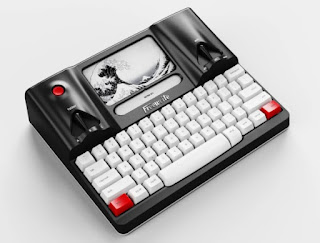
Freewrite Smart Typewriter
https://getfreewrite.com/products/freewrite-smart-typewriter-3rd-gen Well, thanks to this device, my five-year bout of writer's block is...
-
Love is what makes it so hard. But it also makes it so special. It is hard letting go of the things we love. The things which bring us h...
-
 https://getfreewrite.com/products/freewrite-smart-typewriter-3rd-gen Well, thanks to this device, my five-year bout of writer's block is...
-
I find myself world-building again. It is something I do well, having constructed and entire retro-future past for Paris' world in her b...